Can Fish Live Without an Oxygen Pump?
Many aquarium owners eventually ask this question, especially after seeing fish tanks that do not use air stones or bubbling devices.
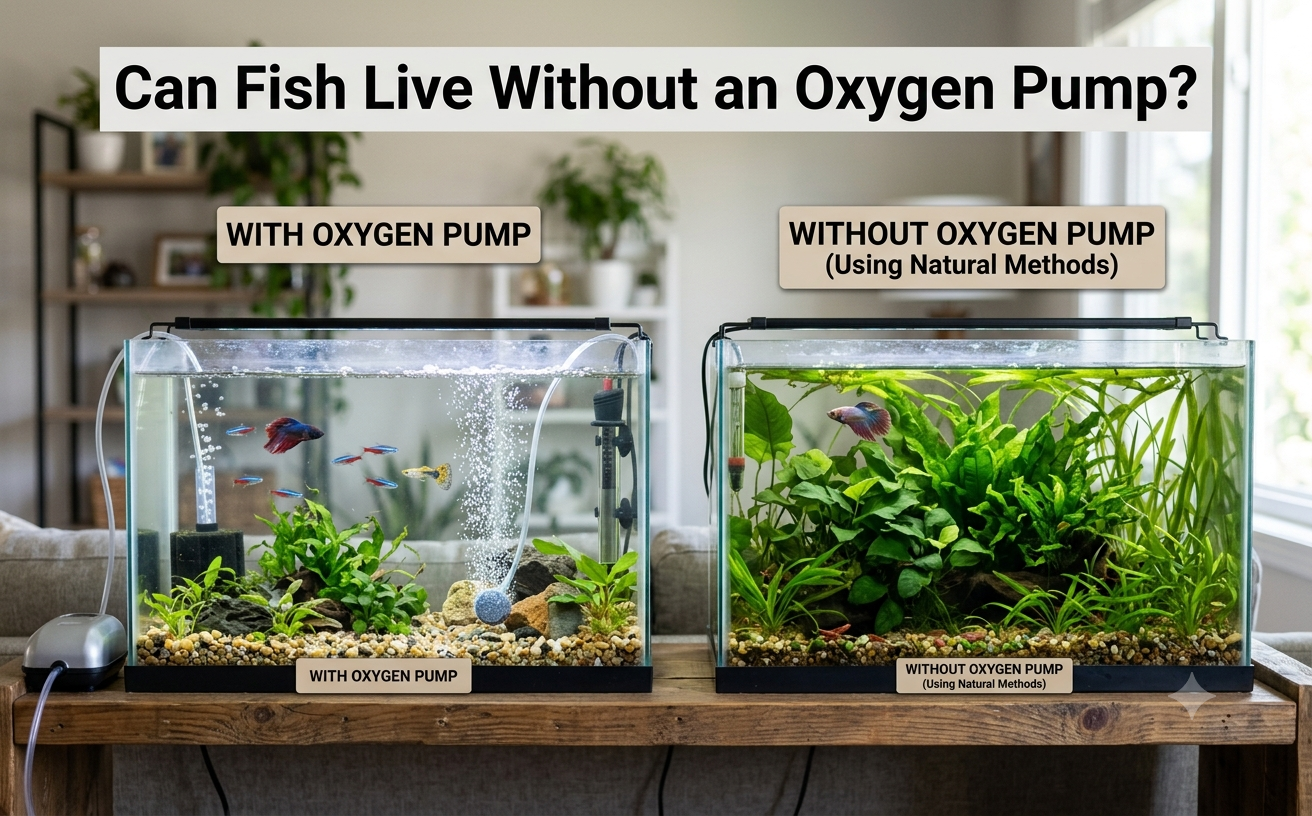
Can fish live without an oxygen pump?
At first glance, the answer may seem confusing. Some tanks bubble constantly, while others are completely still. Some fish stores even say that air pumps are optional. This leads many beginners to assume that oxygen pumps are not important at all.
The truth is more nuanced.
Yes, fish can live without an oxygen pump, but that does not mean oxygen is unimportant. Oxygen is one of the most critical elements in any aquarium. The real question is where the oxygen comes from and how it reaches your fish.
In this article, we will explain what really happens inside a fish tank without an oxygen pump, how long fish can survive, which tanks are at higher risk, and how oxygen problems often go unnoticed until it is too late. This guide is written in simple English for beginners and hobbyists who want clear, honest answers without technical overload.
What Is an Oxygen Pump in an Aquarium?
Before discussing whether fish can live without an oxygen pump, it is important to understand what an oxygen pump actually does.
An oxygen pump, often called an air pump, pushes air through airline tubing into the aquarium. This air is usually released through:
- Air stones
- Bubble wands
- Decorative ornaments
Many people believe the bubbles themselves give oxygen directly to fish. This is a very common misunderstanding.
Do Fish Breathe Bubbles?
No, fish do not breathe bubbles.
Fish absorb oxygen that is dissolved in the water, not the air bubbles rising to the surface. The bubbles play an indirect role.
The Real Job of an Oxygen Pump
An oxygen pump helps by:
- Creating surface movement
- Breaking the water surface tension
- Increasing gas exchange
When the surface of the water moves, oxygen enters the water and carbon dioxide escapes. This process is what keeps oxygen levels healthy.
So, an oxygen pump does not add oxygen directly. It helps the tank absorb oxygen naturally from the air.
Where Does Oxygen in a Fish Tank Come From?
Oxygen in an aquarium comes from three main sources.
Surface Gas Exchange
The primary source of oxygen is the water surface. When water moves at the surface:
- Oxygen enters the water
- Carbon dioxide leaves
Still water absorbs oxygen very slowly. Moving water absorbs oxygen much faster.
Filters and Water Movement
Most aquarium filters create surface agitation. This is why many tanks do not need a separate oxygen pump.
A running filter:
- Moves water constantly
- Agitates the surface
- Helps oxygen dissolve into the water
This is why fish tanks with strong filters often have no air stones.
Live Plants
Live aquarium plants produce oxygen during the day through photosynthesis. This can help increase oxygen levels slightly.
However, plants:
- Stop producing oxygen at night
- Consume oxygen after lights go off
So plants help, but they cannot fully replace surface movement.
Can Fish Live Without an Oxygen Pump?
Yes, fish can live without an oxygen pump, as long as the tank has another way to maintain oxygen levels.
In many aquariums:
- The filter provides enough surface movement
- The tank is lightly stocked
- Water temperature is stable
In these cases, an air pump may not be necessary.
However, problems arise when:
- There is no filter
- Water movement is minimal
- The tank is overcrowded
- Water temperature is high
In such conditions, oxygen levels can drop faster than expected.
How Long Can Fish Live Without an Oxygen Pump?
This depends on several important factors. There is no single safe time limit.
Factors That Affect Survival Without an Oxygen Pump
Tank size
Larger tanks hold more dissolved oxygen and stay stable longer.
Stocking level
More fish means more oxygen consumption.
Water temperature
Warm water holds less oxygen than cool water.
Water movement
Still water becomes oxygen-poor much faster.
Presence of plants
Plants help during the day but not at night.
General Time Estimates
In many home aquariums:
- Several hours: Usually safe
- 12–24 hours: Mild stress may begin
- 24–48 hours: Oxygen stress becomes visible
- Multiple days: High risk of suffocation
Fish rarely die suddenly from lack of oxygen alone, but stress builds quietly until it reaches a tipping point.
Fish Tank Without an Air Pump: When Is It Safe?
A fish tank without an air pump can be safe under the right conditions.
Tanks That Often Do Fine Without Air Pumps
- Tanks with strong filtration
- Planted aquariums with good water flow
- Low-stock community tanks
- Larger aquariums
In these setups, the filter does most of the oxygen work.
Tanks at Higher Risk Without Air Pumps
- Small tanks and bowls
- Heavily stocked tanks
- Tanks with no filter
- Warm water aquariums
- Tanks with little surface movement
In these situations, an oxygen pump can make a big difference.
Signs of Low Oxygen in a Fish Tank
Oxygen problems often go unnoticed until fish begin showing stress.
Common Signs of Low Oxygen
- Fish gasping at the surface
- Fish staying near filter output
- Rapid gill movement
- Lethargy and weak swimming
- Fish clustering near air stones
These signs should never be ignored. Once fish start gasping, oxygen levels are already dangerously low.
Why Oxygen Problems Often Appear at Night
Many aquarium owners are surprised to see fish gasping in the morning even though everything seemed fine the day before.
This happens because:
- Plants stop producing oxygen at night
- Plants and fish both consume oxygen
- Oxygen levels drop steadily overnight
Tanks without good surface movement are especially vulnerable during nighttime hours.
Oxygen Pump vs Filter: Which Is More Important?
This is a common beginner question.
Filters and Oxygen
Filters are usually more important than air pumps because they:
- Support beneficial bacteria
- Control waste
- Provide surface movement
A good filter often eliminates the need for an oxygen pump.
When an Oxygen Pump Is Helpful
An oxygen pump is especially useful when:
- The filter output is weak
- The tank is heavily stocked
- The temperature is high
- During power outages (battery-powered pumps)
In these cases, an air pump provides an extra safety layer.
Can Fish Live Without Oxygen Pump and Filter?
This is where danger increases significantly.
Without both:
- Water becomes still
- Oxygen drops quickly
- Waste builds up
- Beneficial bacteria suffer
Fish may survive for short periods, but conditions deteriorate fast.
Beginner Mistakes About Oxygen in Aquariums
Many oxygen-related problems come from common misconceptions.
“Bubbles Mean Happy Fish”
Bubbles alone do not guarantee safe oxygen levels. Surface movement is what matters.
“If Fish Aren’t Gasping, Oxygen Is Fine”
Fish can be stressed long before visible gasping begins.
“Plants Provide All the Oxygen Fish Need”
Plants help, but they are not enough by themselves, especially at night.