
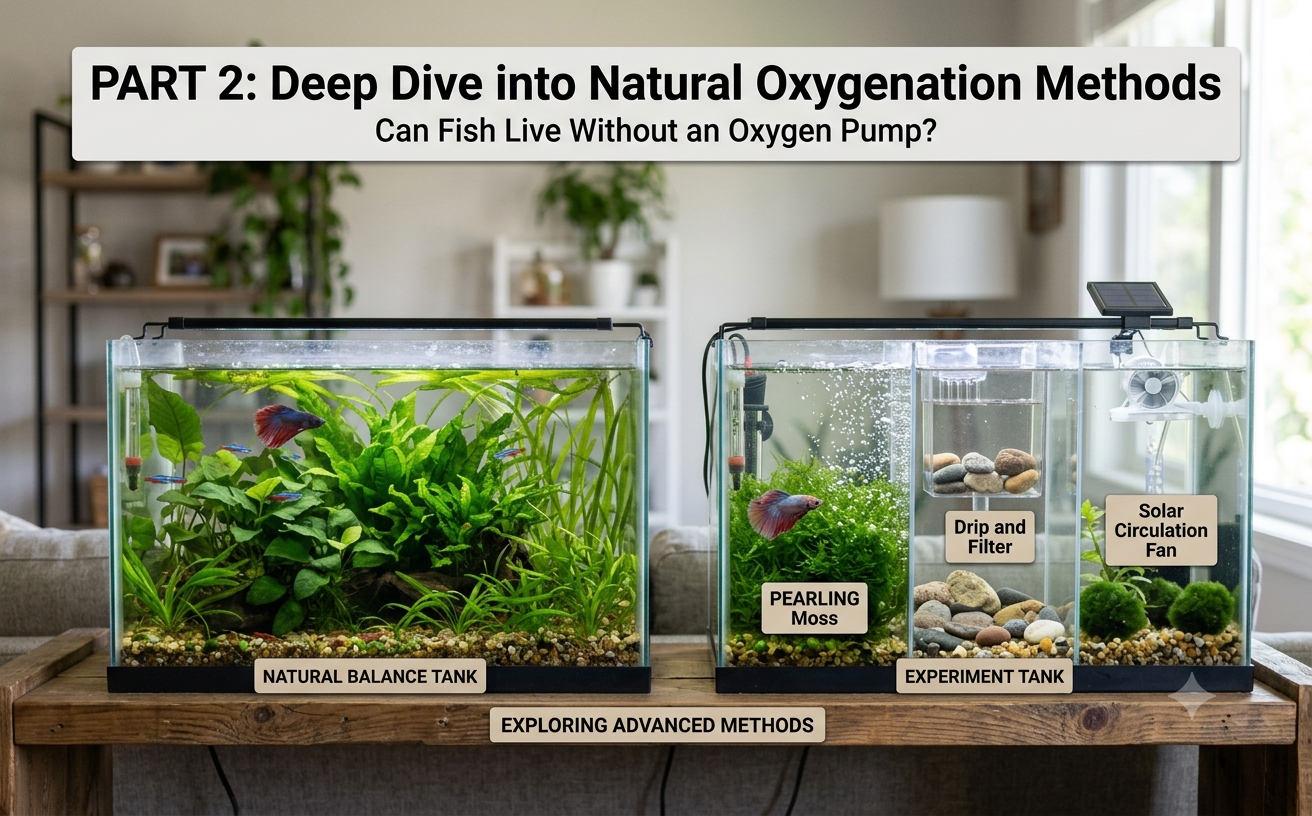
Can Fish Live Without an Oxygen Pump? (PART 2 – Emergency Guide)
In Part 1, we explained the basics of oxygen in aquariums, why air pumps matter, and how fish survive without them. Now, we’ll dive deeper into emergency situations, practical tips, species-specific considerations, and frequently asked questions.
Emergency Situations: Low Oxygen in a Fish Tank
Even if your tank normally survives without an air pump, certain conditions can cause oxygen levels to drop dangerously fast. Recognizing these emergencies early is crucial.
1. Power Outages
During a power outage:
- Filters stop circulating water
- Surface movement ceases
- Oxygen levels begin to fall
Tips to survive a short power outage:
- Use a battery-operated air pump if available
- Stir the water gently every few hours
- Avoid feeding fish to reduce waste production
Most tanks with low stocking can survive 12–24 hours. Larger or heavily stocked tanks are more vulnerable.
2. Hot Weather or Temperature Spikes
Warm water holds less dissolved oxygen. During summer or heat waves:
- Fish consume oxygen faster
- Oxygen saturation drops quickly
Emergency solutions:
- Lower the water temperature gradually
- Increase surface movement manually
- Consider temporary shading or a fan over the tank
3. Overcrowding
Too many fish in a small tank can deplete oxygen quickly. Even a large air pump may not help if fish numbers exceed the tank’s capacity.
Signs of overcrowding:
- Fish cluster near the surface or filter output
- Gasping and rapid gill movement
- Lethargy and weak swimming
The ultimate fix is reducing stocking levels or moving some fish temporarily.
4. Algae Blooms
Algae produce oxygen during the day but consume it at night. A sudden bloom can:
- Increase oxygen consumption at night
- Cause nighttime gasping
- Stress your fish
Regular maintenance and avoiding nutrient overload can prevent this problem.
How to Increase Oxygen in a Tank Without Equipment
Even without an air pump or filter, there are ways to improve oxygen levels temporarily.
- Manual Surface Agitation
- Use a cup or gentle stirrer to disturb the water surface every few hours.
- Pouring water from one container to another also helps.
- Partial Water Changes
- Change 20–30% of the water with dechlorinated water.
- Cooler water holds more oxygen, so match temperature carefully.
- Add Floating Plants
- Plants provide shade and reduce stress.
- Avoid dense plants at night, as they consume oxygen after lights out.
- Decrease Stocking
- Reduce fish numbers to prevent oxygen depletion.
- Temporary isolation can save lives in emergencies.
Species-Specific Considerations
Some fish handle low oxygen better than others. Knowing your species helps plan for filterless or low-oxygen situations.
Bettas
- Can breathe atmospheric air using their labyrinth organ
- Survive low-oxygen conditions longer than many fish
- Still need clean water for long-term health
Goldfish
- Produce a lot of waste and consume oxygen quickly
- Cannot survive without movement and filtration for long
- Highly sensitive to overcrowding
Guppies, Mollies, and Platies
- Hardy species but still rely on surface movement and water flow
- Can survive short periods without an air pump, but stress builds quickly
Shrimp and Snails
- Low oxygen tolerance, especially in small tanks
- Oxygen pumps are highly recommended
Can Fish Live Without an Oxygen Pump Long-Term?
Yes, under very specific conditions:
- Strong filter creating surface movement
- Light stocking
- Regular water changes
- Stable temperature
However, relying on this long-term is risky. Even hardy species show stress, slower growth, and shorter lifespan in stagnant water.
???? For a deeper explanation of survival without filtration and oxygen, see our main guide:
Can Fish Live Without a Filter? (Honest Answer)
Frequently Asked Questions (FAQ)
Q1: Do all fish need an air pump?
No. Many fish survive without a pump if the tank has strong water movement from a filter. However, small tanks, bowls, or heavily stocked tanks usually require supplemental oxygen.
Q2: How long can fish live without an oxygen pump?
Most fish can survive 12–24 hours under moderate conditions. Beyond that, oxygen depletion becomes risky, especially in small, warm, or crowded tanks.
Q3: Can a filter replace an air pump?
Filters often provide enough surface movement to maintain oxygen levels. However, an air pump is helpful in emergencies, during power outages, or in heavily stocked tanks.
Q4: Can bettas survive without an air pump?
Yes, bettas have a labyrinth organ and can breathe atmospheric air. Still, stagnant water and ammonia buildup will stress them over time.
Q5: What are the signs of oxygen stress?
- Gasping at the surface
- Clustering near filter outflow
- Rapid gill movement
- Lethargy or erratic swimming
Immediate action is required if these signs appear.
Conclusion: The Honest Answer
Fish can survive without an oxygen pump, but survival depends on:
- Tank size
- Stocking levels
- Water movement
- Temperature
- Plant presence
An air pump is a safety net that reduces stress, protects fish during emergencies, and supports long-term health. Even hardy species like bettas or guppies benefit from proper oxygenation.
For the best results, think of filtration and oxygen together. A well-filtered tank with adequate water movement rarely needs an air pump but having one adds extra security and peace of mind.
)